2021 Deep Rivers Run Quiet, Norrtalje Konsthall, Sweden
In Reena Saini Kallat’s works, the border, the territory, and the map have recurred as potent forms that point to broad historical narratives as well as the manner in which humankind has left the imprint of history on geography.
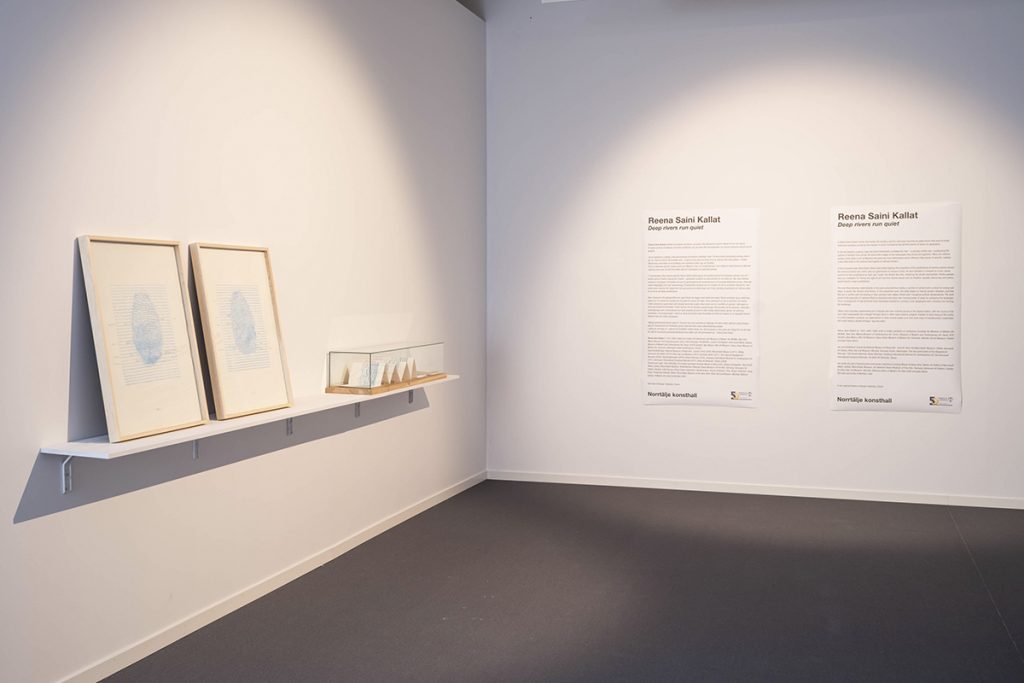
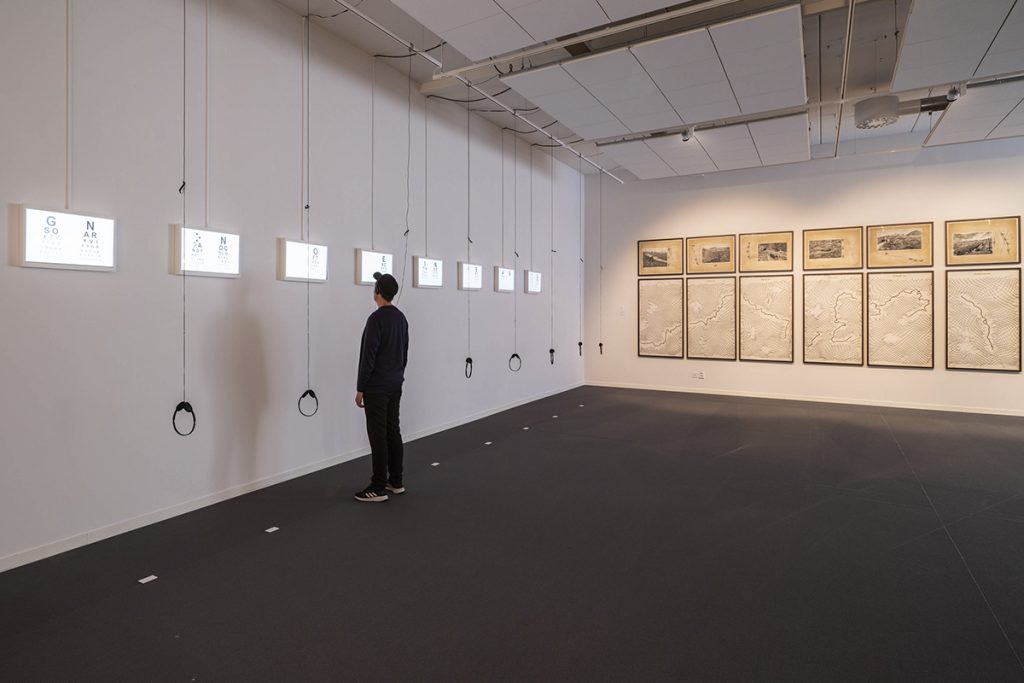
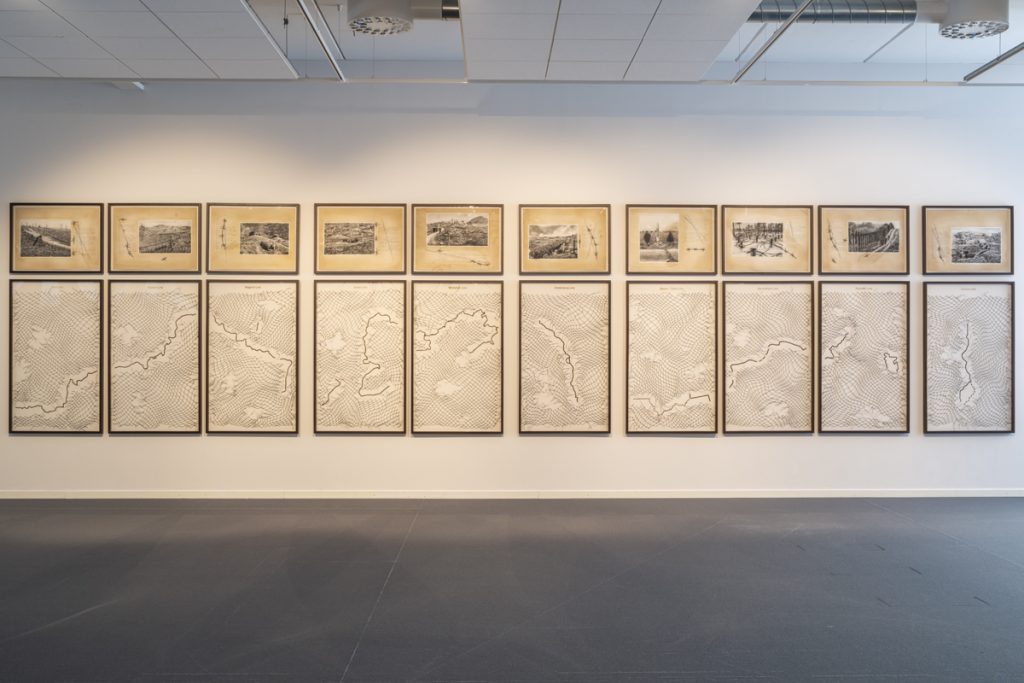
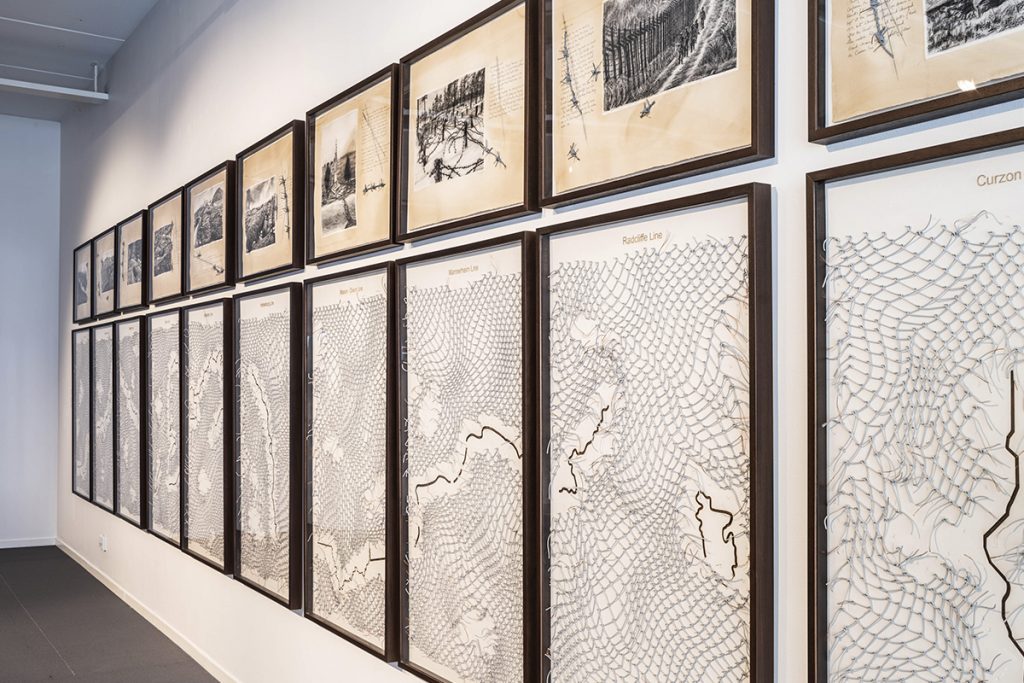
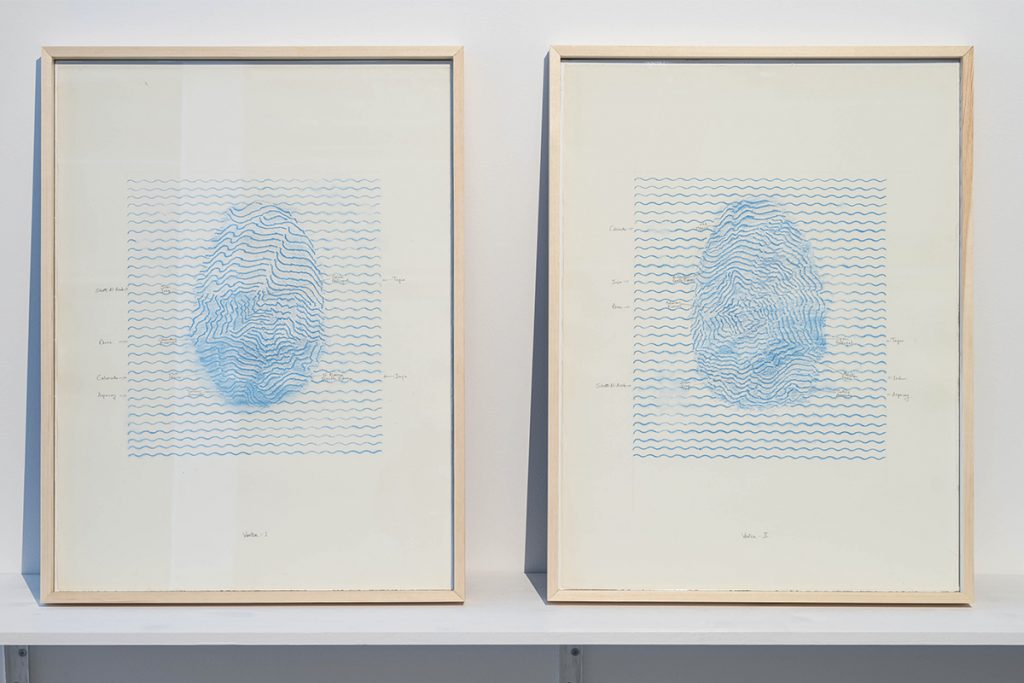
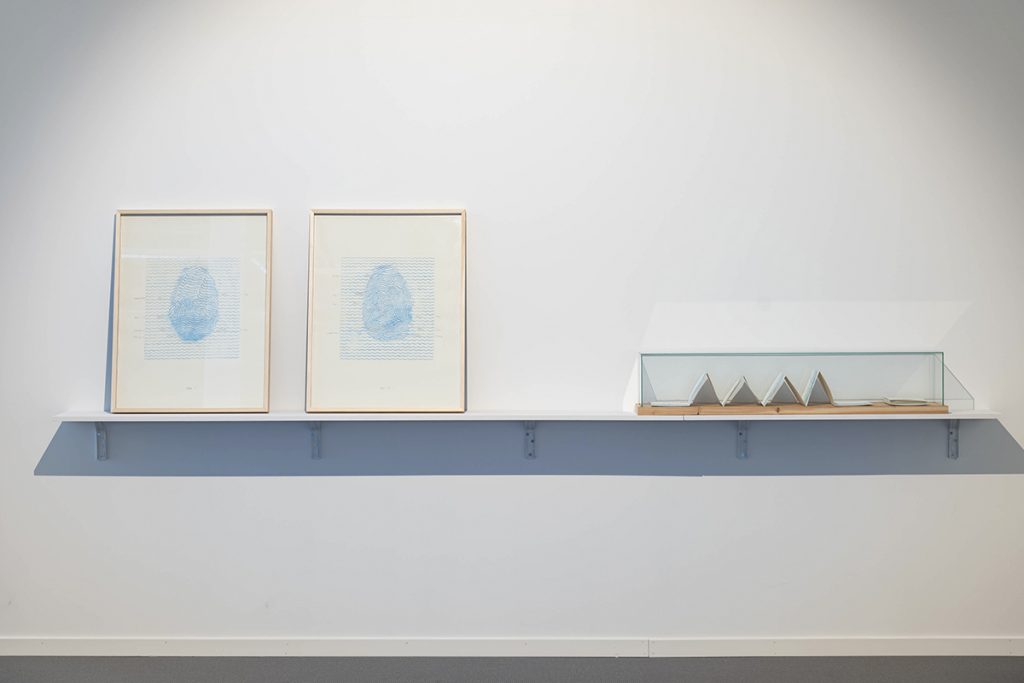
In the ten diptychs Leaking Lines, the artist intentionally conflates the ‘line’—a primary artistic tool—juxtaposing the outlines of borders from across the world with images of the landscapes they divide and apportion. Many are national borders while others such as Maginot line were war time fortifications which offered a false sense of security. Leaking Lines refers both to the violence and fragility of national borders.
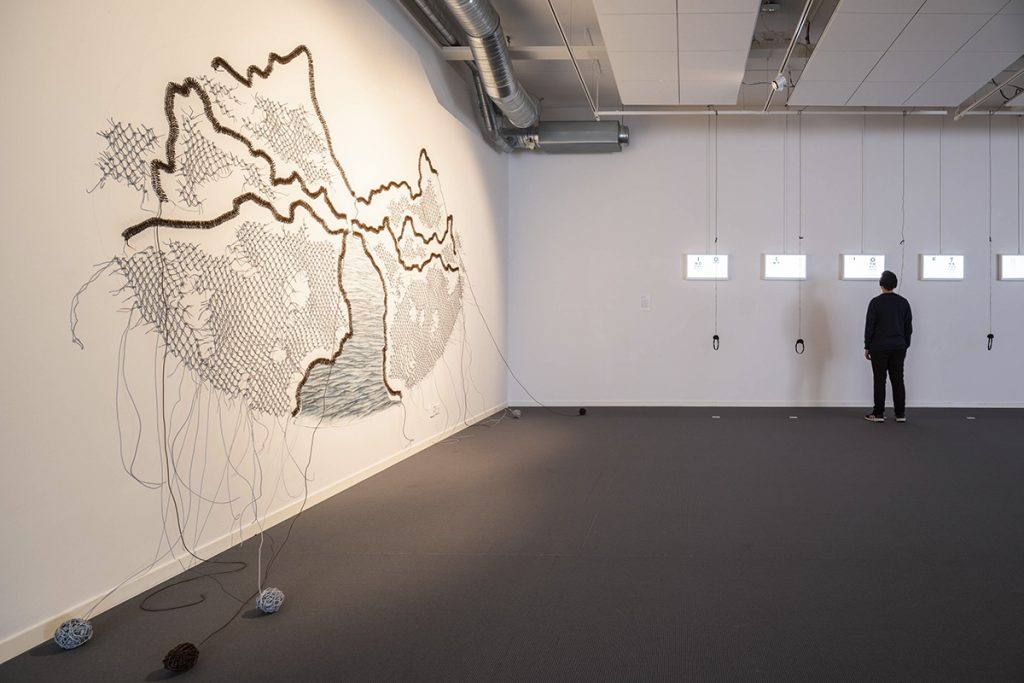
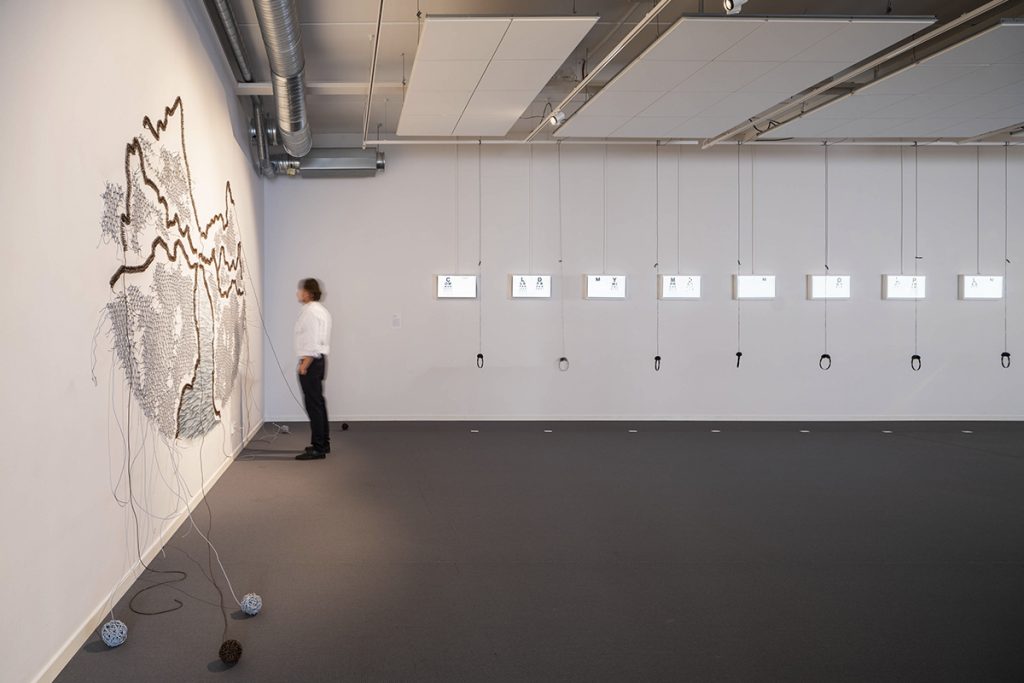
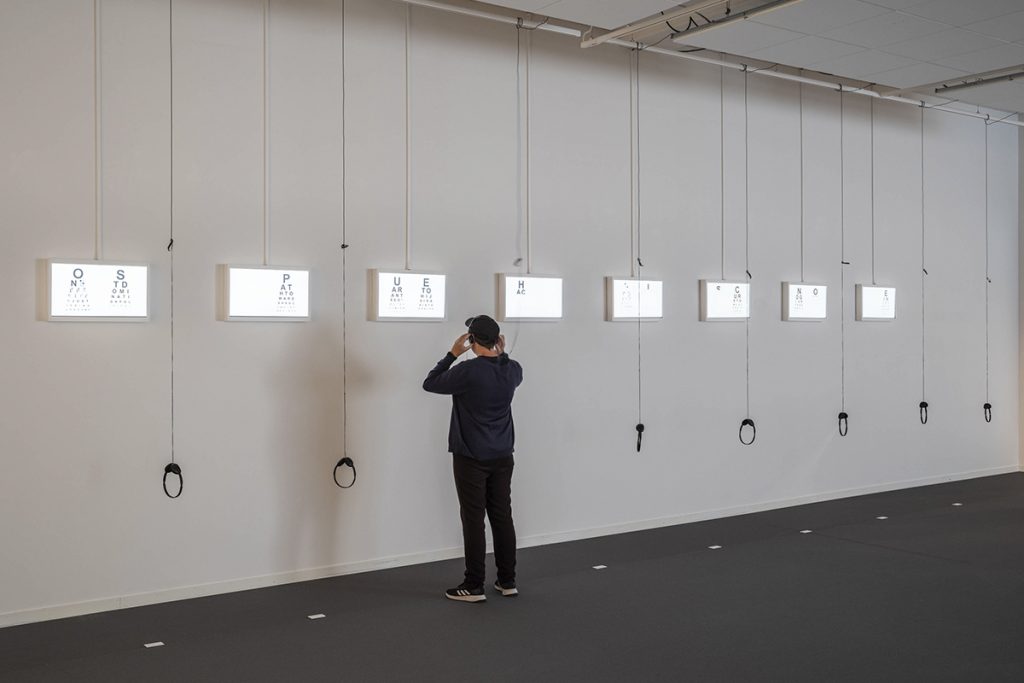
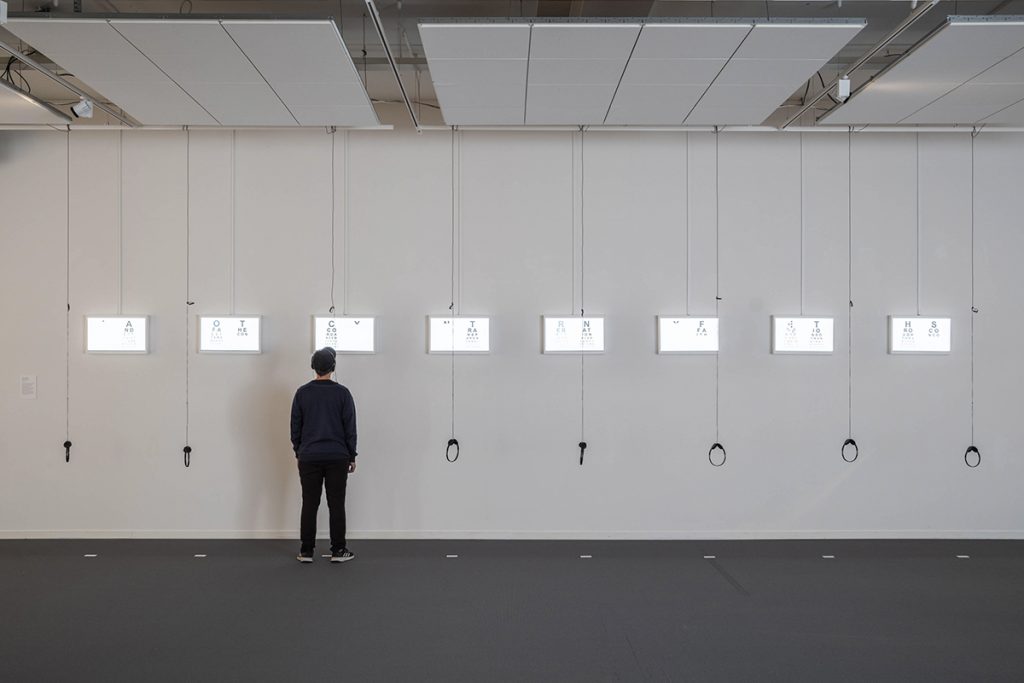
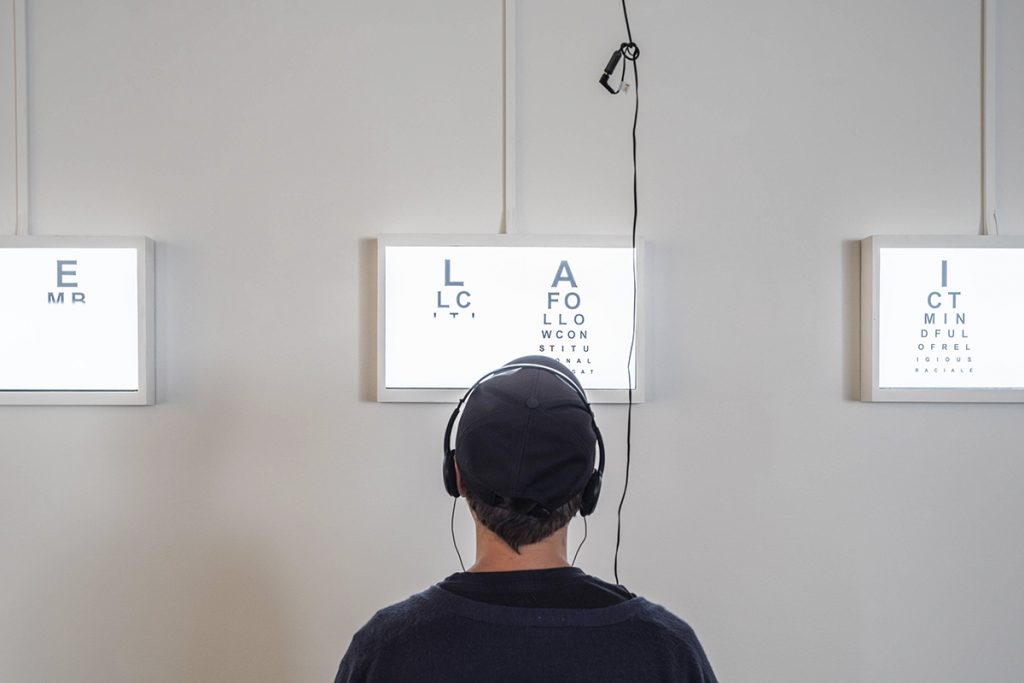
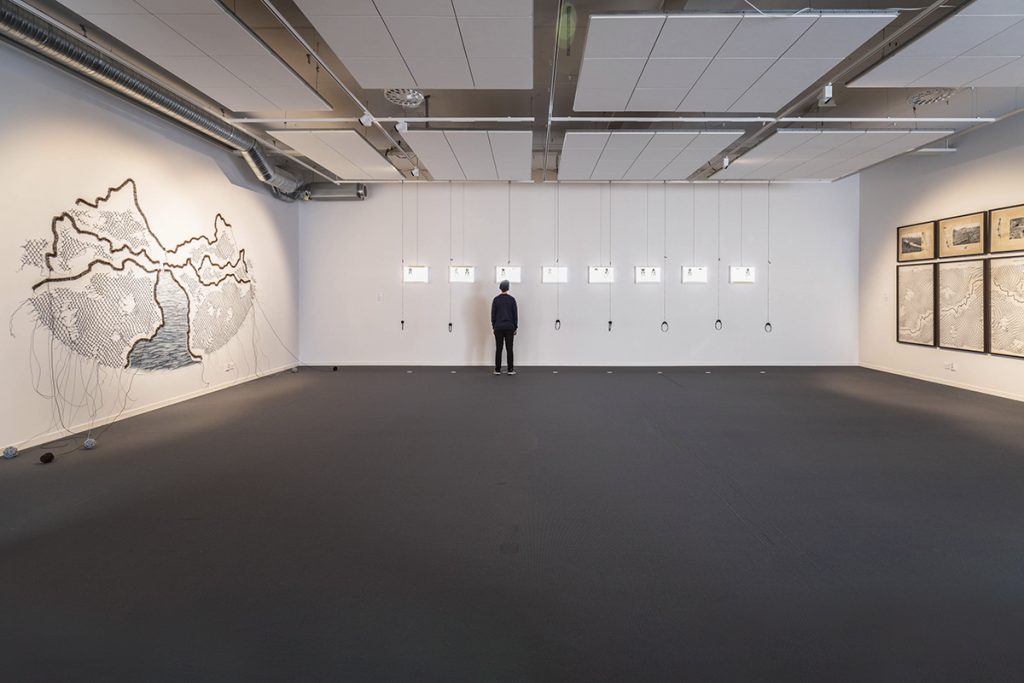
In the 8-channel video Blind Spots, Reena Saini Kallat deploys the preambles of the constitutions of warring nations around the world as Snellen eye charts used by optometrists to measure vision. As each alphabet is revealed at a time, words common to the constitutions of each pair morph into Braille-like dots, rendering the words inaccessible. Braille appears here as a metaphor for having lost sight of our common shared values such as freedom, equality, democracy and justice, words found in most constitutions.
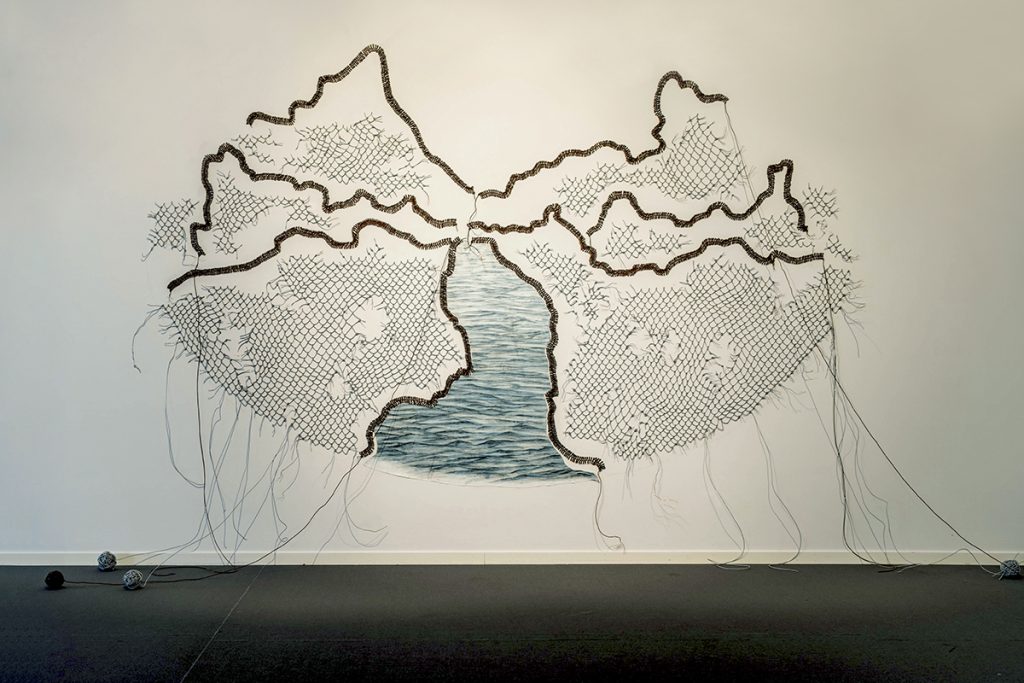
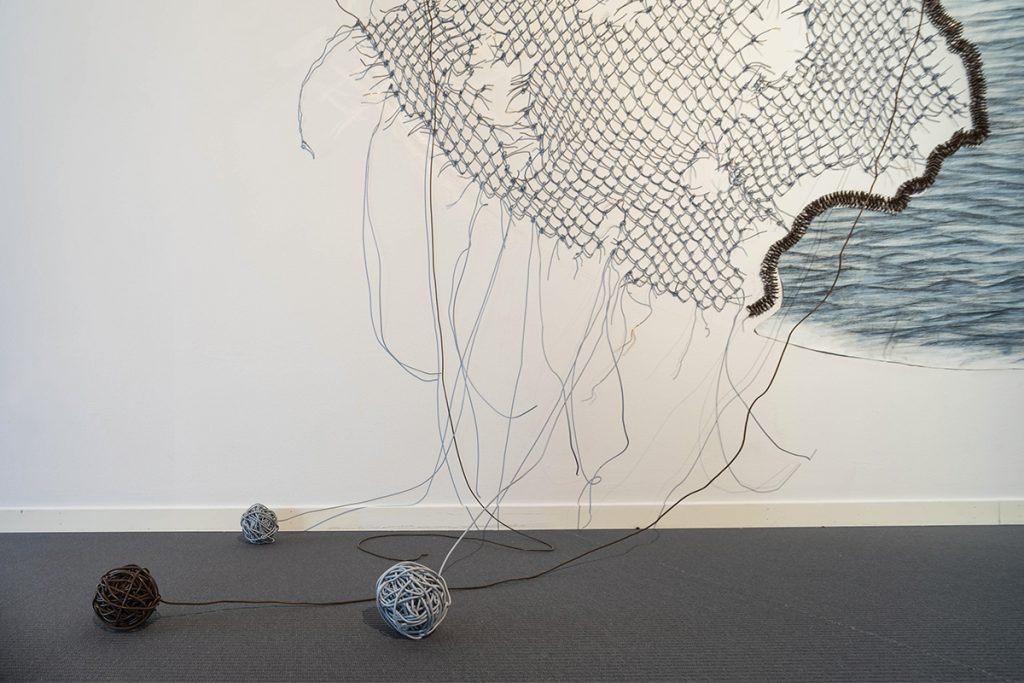
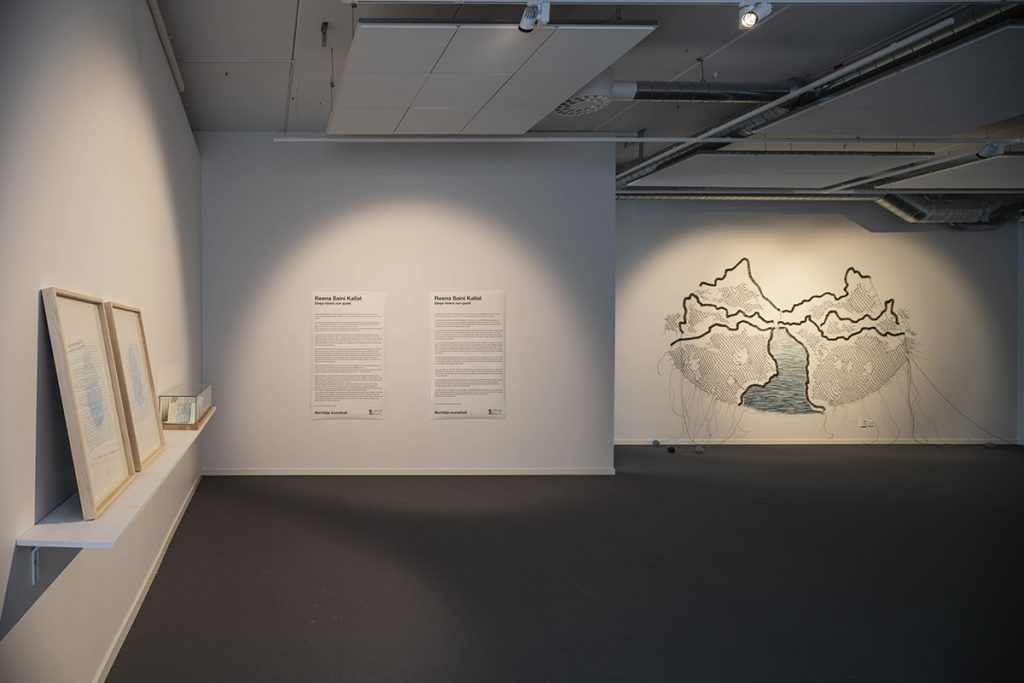
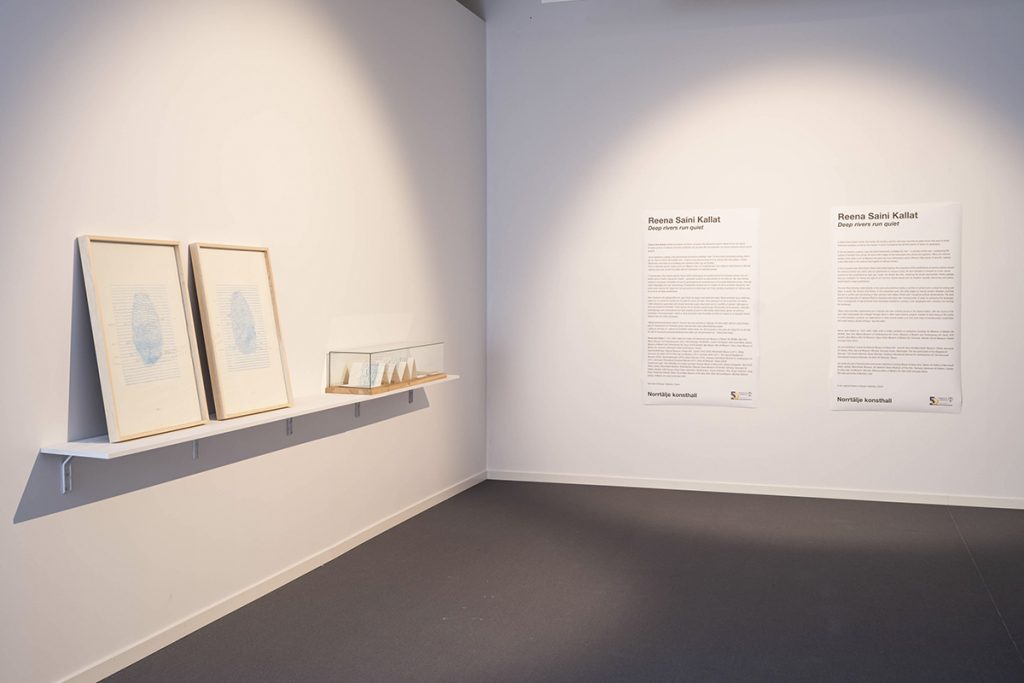
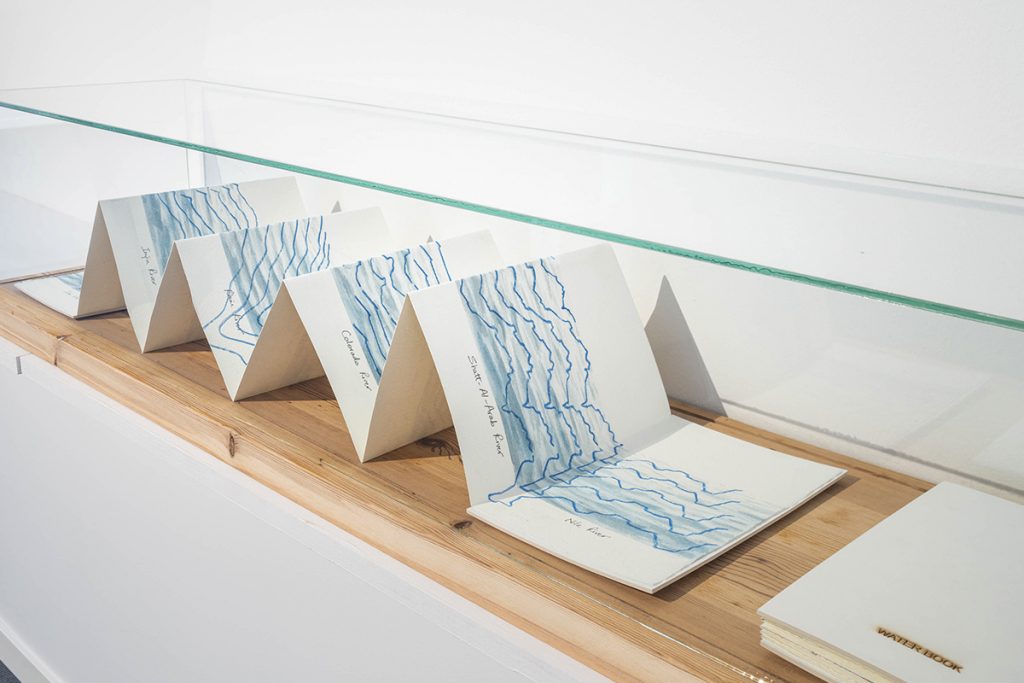
The new River drawing, made directly on the wall using electrical cables, a symbol of contact and a conduit for energy and ideas, is woven like barriers and fences. In this subversive work, the artist began by tracing borders between countries that are in conflict over the sharing of their common river waters. Rivers don’t recognize political demarcations. The work points to the absurdity of national efforts to discipline and claim ever-moving bodies of water by reshaping the landscape. The re-arrangement of rigid territorial lines seamlessly transforms, carving a new topography with a flowing river forming the landscape.
“Many trans-boundary agreements are in dispute over who controls access to the shared waters, with the course of the river itself manipulated and changed through dams or other hydro-electric projects. Instead of rivers being at the centre of conflict between countries, our dependence on them should enable us to find more ways of transboundary cooperation with water being a shared heritage” says the artist.